

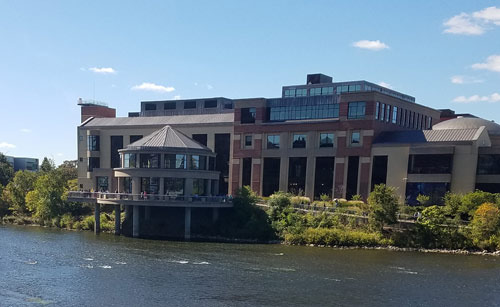
Grand Rapids, Michigan, is considered one of the fastest-growing urban economies in the Midwest.
Once nicknamed 'Furniture City' for its furniture manufacturing, the city has diversified its industrial structure over the past few decades, building a balanced economy in healthcare, manufacturing, food, and technology. As of the 2020s, the GDP of the Grand Rapids metropolitan area ranks second in Michigan, following Detroit.
The healthcare industry currently forms the largest employer group in Grand Rapids. Spectrum Health, now rebranded as Corewell Health, is a nonprofit healthcare system based in Grand Rapids and the largest private employer in the western Michigan region. Corewell Health operates over 30 hospitals and clinics, employing tens of thousands of staff. Additionally, other healthcare institutions like Mercy Health also have large facilities in the Grand Rapids area, making the healthcare industry a core pillar of the local economy. The Michigan State University College of Human Medicine has a campus in Grand Rapids, enhancing medical research and education functions.
Manufacturing still plays a significant role in the Grand Rapids economy. In the furniture industry, global office furniture brands such as Herman Miller, Steelcase, and Knoll have their headquarters or major production facilities in the Grand Rapids metropolitan area. These companies go beyond simple manufacturing to include ergonomic research, design, and material development, establishing Grand Rapids as a hub for the global office furniture industry. The automotive parts manufacturing sector also remains strong, connected to the overall automotive industry ecosystem in Michigan.
The food and beverage industry is a hidden economic strength of Grand Rapids. The craft beer industry has exploded since the 2010s, with dozens of small breweries, including Founders Brewing Co., establishing themselves in the Grand Rapids area. Founders Brewing is now recognized as one of the fastest-growing craft breweries in the U.S. and has a nationwide distribution network. Additionally, food companies based in Grand Rapids, such as Sparks, are leading the food processing industry utilizing Michigan's agricultural resources.
The technology (IT) industry is also rapidly growing. Although the tech startup ecosystem in Grand Rapids formed later than in Detroit or Ann Arbor, it has seen rapid growth since 2015, earning the nickname 'West Michigan Silicon Valley.' Grand Valley State University and Calvin University supply tech talent, and startups and small IT companies are gathering around the downtown innovation district. Startups in software development, health tech, and fintech are showing particularly notable growth.
The logistics and distribution sector also holds an important position in the Grand Rapids economy. Thanks to its geographical advantage of cargo handling through Gerald R. Ford International Airport and its location at major highway intersections like I-96 and I-196, large-scale logistics warehouses and distribution centers have been established in the outskirts of Grand Rapids. Major retail companies like Amazon and Walmart also have logistics centers in the Grand Rapids metropolitan area, and employment in this sector continues to grow.
The Grand Rapids economy has shown relative resilience to economic downturns due to its diversified structure that does not rely on a single industry. This city, with balanced development in healthcare, manufacturing, food, technology, and logistics, has experienced a quicker economic recovery compared to other cities in Michigan following the 2008 financial crisis and the 2020 COVID-19 pandemic. This economic stability becomes an important consideration for those contemplating a move to Grand Rapids.
 Curious
 NoMoreDeca
 moonforesttraveler2017




 moo moo |
 ultron78 |
 garlic bread |
 Sugar Cream Door Bulletproof Noodles |
 urbanmint |
 apricotla |
  carpflow |
 oneonly |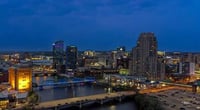
 icotla |
 So is multiplied by So, So Ji-sub |
  Where is a really nice neighborhood? |
  Real Estate |
  Forest Gump |
  Real Estate Investment Korean American |
  Dollydori, Lover of Movies |
  dmzline |
  travelo |
  American Food Information & Calories |
  Splendid Mission |
  sparklingo |
  Watch Walker |
  Soy Angelino |
  autumn |
  K-POP TV News |
  cortiva6 |
  Nevada Teppanyaki |
  aerion99 |
  Golado |
  Maximum Pro |
  Joyce blog |