
When people think of Seattle, the first thing that comes to mind is often 'rain.' The city has a strong image of frequent rain and overcast skies throughout the year, but when it comes to snow, it's a different story. Snowfall in Seattle is surprisingly rare.
Of course, the state of Washington itself gets a lot of snow. The Olympic Mountains and Mount Rainier, for example, receive heavy snowfall every winter, and the ski season is long. However, downtown Seattle is at a low elevation and has a maritime climate, so there aren't many days when it snows enough to accumulate.
On average, Seattle has only about 4 to 5 days of snowfall per year, and most of the time, it lightly snows in the morning and then turns to rain or melts by the afternoon. Accumulating snow is truly a 'special winter event.'
To understand Seattle's climate, one must consider its geographical location near the Pacific Ocean. This area is classified as a Marine West Coast Climate, which means it doesn't get very cold in winter and isn't too hot in summer. The warm air blowing in from the Pacific helps maintain a consistent temperature in the city, so it rarely drops below freezing.
As a result, when it does snow, it usually falls as 'wet snow' and quickly turns to rain. Average temperatures show that from December to February, daytime highs are around 6 to 8 degrees Celsius, and nighttime lows hover around -1 to -2 degrees. For snow to occur, the atmospheric temperature needs to drop significantly below freezing, which doesn't often happen in Seattle.
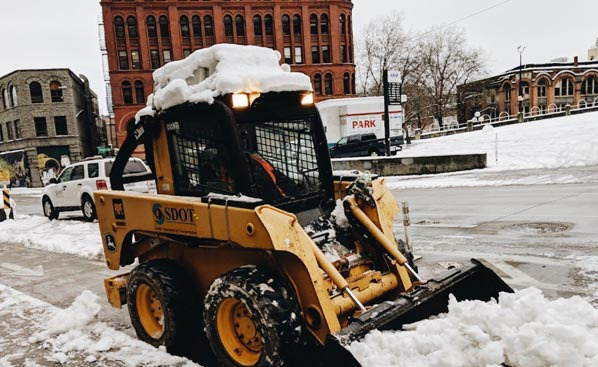
Thus, for Seattle residents, snow is somewhat of a festive occurrence. On the day of the first snowfall, social media is flooded with photos, and children rush out to their apartment front yards to build small snowmen. However, the city is not well-equipped for snow, so transportation quickly comes to a standstill. Because snow is so rare, there isn't enough snow removal equipment, and the roads are steep, causing cars to slide even with a little accumulation.
In fact, Seattle residents often worry, "Aren't we getting a snow day?" at the mere mention of snow in the forecast. When a heavy snowfall occurred in 2019, the city nearly came to a halt, and bus and train services were temporarily suspended.
The best time for snow in Seattle is between late December and early February. Rarely, when the Arctic air mass descends or cold air flows in from British Columbia, Canada, heavy snowfall can occur. However, even that usually lasts only a day or two.
So, Seattle residents refer to snow as a "one-day winter wonderland" every time it falls. The fleeting beauty of the snow can feel even more romantic.






 crystalx |
 mystery |
 harvest |

 laro90 |
  MEDBIO American Doctor Blog |
  SWAT TEAM BLK |
  DREAM BIG |
  frostbite |
  330 Forever My Love |
  El Dorado |
  dralix58 |
  Gorama Round |
  Skydiving |
  dreamport |
  Yellow Snowman |
  Toaster Pizza Magic Show |
  velvetnom |
  Anytime Journey |
  Mrs. Duluth |
  jaxter |
  Atlanta Mama |
  Baguette Blog |
  Tan Sol |