
The answer to this question is not straightforward.
This is because Chino is not a city where jobs and housing are completely separate; it is a city that operates within the economic zone of the Inland Empire.
In the past, Chino was known for its dairy and agriculture. In fact, decades ago, vast ranches and milk production facilities were the center of the local economy.
However, today's Chino looks completely different. The manufacturing, logistics, retail, and healthcare sectors have all grown in balance, providing a variety of job opportunities.
In particular, the largest employment sector is logistics and distribution. The Inland Empire has grown into one of the largest logistics hubs in the United States, with large logistics centers concentrated around nearby Ontario and Rancho Cucamonga.
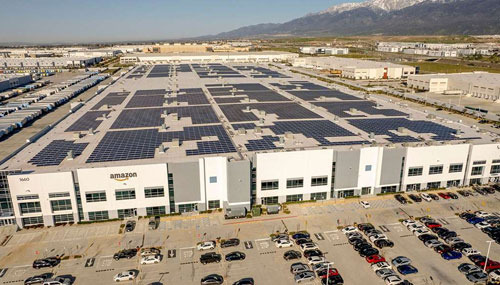
This area hosts logistics facilities for major companies like Amazon, UPS, and FedEx, offering various employment opportunities in warehouse operations, transportation, management, and technical positions.
There are also public sector jobs available. The California Institution for Men is located in Chino, leading to steady employment in correctional administration, security, and facility management.
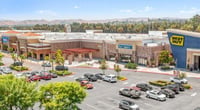
Retail also plays a significant role in the local economy. Large commercial areas, including the Chino Spectrum Towne Center, host numerous stores and restaurants, leading to consistent demand for sales, service, and management positions. Recently, the increase in Asian markets and dining establishments has broadened employment opportunities for the Korean community as well.
The healthcare sector cannot be overlooked either. Facilities like Chino Valley Medical Center and other nearby medical institutions are continuously hiring nurses, medical technicians, administrative staff, and support personnel.
However, not all Chino residents work within the city. Many commute to Ontario, Pomona, Rancho Cucamonga, as well as Los Angeles and Orange County. The use of the 60, 71, and 91 freeways allows for commuting across a wide area.
In fact, Chino's high median household income is significantly influenced by this extensive commuting economy. It is not uncommon for professionals and corporate employees to live in Chino while commuting to nearby cities that offer higher salaries.
Ultimately, the job environment in Chino should not be judged solely by the city itself. Chino's location connects the Inland Empire with the LA area, allowing access to a vast employment market that includes surrounding cities. Therefore, when considering job prospects, it is much more realistic to approach it from the perspective of "utilizing the entire Southern California job market from Chino as a base" rather than just "looking for jobs within Chino."
 FlashSikhye
 EndorphinGirl







 timemachine |
 Fortress K |
 RV Samuel's Dad |
 Uptown |
 Agenda Center |
 DREAM BIG |

 Cap Com |
 U.S. Weather Bureau News |
  virex |
  Yoyma |
  California Dreamer |
  Taco Seattle |
  zenvior |
  breaddough |
  arion9 |
  starfall |
  Kims Spring |
  vexon87 |
  seouljung |
  My Two Way |
  People Moon |
  Well Done Sir |
  Raymond K. |
  Dad's Tribute TC |
  Fast and Curious BLOG |