

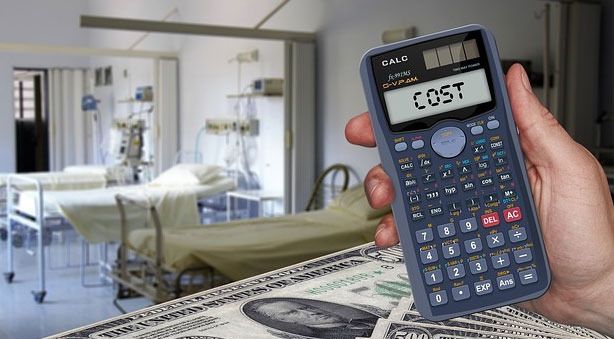
It has already been over 30 years since I immigrated to the United States. When I applied for a green card and waited, I had no insurance, so a visit to the hospital would easily cost around $300.
So I got used to enduring just about anything. Then, the so-called Obamacare (officially known as the Affordable Care Act) introduced by President Obama during his administration was a response to such institutional limitations. It was especially for the middle class, which is neither extremely wealthy nor poor enough to receive government assistance.
At that time, about 47 million people in the U.S. had no health insurance, and most of them were from this 'near-poor class.' These people were not exactly welfare recipients, and getting private insurance on their own was too expensive. So, if they got a serious illness like cancer or heart disease, losing their home was just a matter of time. President Obama wanted to change this reality.
In this regard, Obamacare has a meaning that goes beyond the simple slogan of "Insurance for Everyone!" It was about providing a minimum safety net for those placed in an unbalanced structure rather than universal health insurance. In fact, this concept had already been attempted in some European countries. Notably, the Netherlands and Switzerland.
In the Netherlands, the government designates standard benefit items, and the tax office directly collects insurance premiums at a fixed rate to provide subsidies. So even if you enroll in a private insurance company, the government's intervention is very strong. Switzerland is more market-friendly. Like car insurance in Korea, anyone is required to enroll in basic insurance, and the rest is a structure that allows for optional expansion of coverage. The government sets only a minimum safety net and leaves it to the market. Obamacare is positioned somewhere in between the systems of these two countries.
Of course, there were many opposing opinions. Many said, "It just raises taxes without effectiveness," and "It conflicts with existing state welfare systems," and in places like New York, people using local programs like 'Child Health Plus' and 'Family Health Plus' complained that they could no longer use them because of Obamacare.
But the facts are a bit different. Obamacare is a system that expanded the existing Medicaid (public insurance for the poor). It made benefits available not only to existing welfare recipients but also to the middle class, who were in a financially ambiguous position. In New York State, with federal support, the Medicaid income threshold was raised to 200% of the poverty line, allowing about 280,000 people to receive new health coverage. As a result, more people benefited than under the existing programs.
Another important point. Obamacare is also a system that has made government finances more efficient, going beyond just "collecting taxes and distributing them." In the past, uninsured individuals would seek hospital care when their conditions worsened, leading to skyrocketing treatment costs, which directly translated into burdens on Medicaid or the government. However, with the implementation of Obamacare, early treatment became possible, which reduced the occurrence of severe diseases.
In fact, as a result, hospitals and the government compromised to reduce Medicare spending by $335 billion, and through negotiations, they also imposed an additional $107 billion burden on pharmaceutical companies, creating significant financial savings. Moreover, the additional taxes were concentrated on the top 5%, so it was not a significant burden for ordinary citizens.
Obamacare is not a perfect system. I still sigh when my insurance premium is deducted every month.
However, now that I don't have to live in fear of "What if I get a serious illness?" I feel a bit relieved. And I believe that the greatest value of this system is that many people can share that relief.
So what about now? It has been over 10 years since Obamacare was implemented, but there are still people in the U.S. without health insurance, that is, 'uninsured.' President Obama worked hard to create the system, but not everyone automatically got insurance.
As of 2024, about 26 million people are still uninsured, which is certainly a reduction from the previous 47 million, but it is still a surprisingly large number.
So how do those people go to the hospital now? Legally, anyone can receive emergency treatment in the emergency room.
Hospitals do not refuse treatment just because someone appears to be without money. Due to the U.S. EMTALA law, emergency rooms must provide care regardless of insurance status in emergencies. But the problem comes next. A single emergency treatment can result in bills of thousands or tens of thousands of dollars. Even low-income individuals ultimately have to bear that debt. Cases leading to bankruptcy are still common.
So can't they just enroll in Obamacare? That's true. But the reality is a bit different. Many find the premiums burdensome or are unaware of the system and fail to enroll. Especially undocumented immigrants are completely excluded from Obamacare, so they have no choice but to use private clinics or free clinics.
And another thing, Obamacare is no longer 'mandatory enrollment.' Initially, there was a penalty for not enrolling in insurance, but during the Trump administration, that provision was abolished, so now there is no penalty for being uninsured. Therefore, among those who find premiums burdensome, some simply say, 'I won't do it' and live without insurance.
This creates a vicious cycle that brings us back to square one. If someone lives without insurance and then gets a serious illness, it is already too late, and the hospital bills are again thousands or tens of thousands of dollars. From a national perspective, this becomes another cost burden. People do not go to the hospital until their conditions worsen, just like before.
So even now, free clinics and sliding scale fee programs (which adjust medical fees based on income) for the uninsured are operating across the U.S., but they are woefully insufficient to meet the demand.
Ultimately, being uninsured in the U.S. today means living a life that is still like walking a tightrope. And when you fall off that rope, you have to leave it to luck as to who will catch you. Obamacare was an attempt to prevent that, and while traces of it remain, many people are still left in the shadows.
So I always tell those around me, "If you are healthy now, that is luck, but don't rely too much on that luck." Insurance is a safety net that you prepare in advance for the future.
 USAToday







 Gorama Round |
 LIZ Legal Information Blog |
 Egg Steamed Pot |
 novapixel |
 xylora |
 Pirate Ship Popcorn Maker |
 Total Beauty |
 Toaster Pizza Magic Show |
 Baguette Blog |
 California Information News |
  DREAM BIG |
  frostbite |
  330 Forever My Love |
  El Dorado |
  dralix58 |
  Skydiving |
  dreamport |
  Yellow Snowman |
  velvetnom |
  Anytime Journey |
  Mrs. Duluth |
  jaxter |
  Atlanta Mama |
  Tan Sol |
  US Embassy |
  Korean Mom |
  My NYC |