
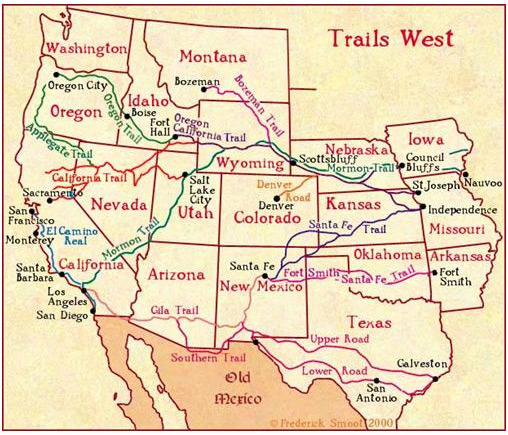
The term 'Trails West' is a symbolic phrase of the American West expansion era.
Literally meaning the paths heading west, it includes various routes such as the Oregon Trail, California Trail, Mormon Trail, and Santa Fe Trail. Among them, Wyoming was the central hub where all these trails converged.
For pioneers starting from the eastern United States, Wyoming was the land they encountered immediately after crossing the Nebraska plains. They referred to it as the 'Gateway to the West.'
Wyoming is located at the point where the Great Plains transition to the Rocky Mountains, making it the most challenging section for those following the trails. The weather changed several times a day, and when it rained, the ground turned to mud, causing wagon wheels to get stuck, while strong winds blew sand into their eyes and mouths.
Particularly, South Pass was a mountain path over 2,000 meters above sea level, where encountering a snowstorm often led to losing one's way. However, crossing this pass was essential to reach Oregon or California, so many people risked their lives to get through.
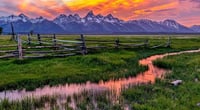
The scenery of Wyoming evoked both wonder and fear in the pioneers. The endless prairies, red rock canyons, and winds blowing from all directions made them feel how small they truly were.
Along the way, there were Indian reservations, and tense situations occasionally arose. However, most Native Americans were simply wary of the strangers passing through their land and were not hostile.
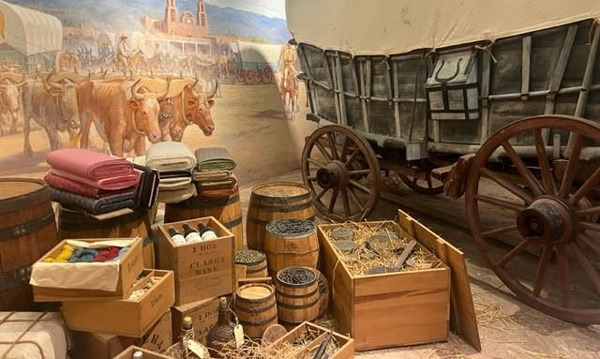
Another notable place is Fort Laramie. This military fort and trading post was where everyone traveling west along the trail would stop for a while.
Travelers replenished their food supplies, repaired their wagons, and replaced sick horses here. Some even succumbed to illness and were buried on-site. Today, visiting the Fort Laramie National Historic Site reveals traces of that time.
The old barracks, blacksmith shop, trading post, and the gravestones of the pioneers from that era... Standing there, facing a century of winds, it feels as if time in the West has stopped.
The journey of Trails West through Wyoming was not just a trip; it was a 'march toward destiny.' Walking 15 to 20 miles a day, people continued on despite losing family members.
Today, while traveling through Wyoming, there are still places where the wheel ruts remain faintly visible along the roadside. That is the trace of Trails West. Standing in the quiet prairie, it feels as if the footsteps of long-ago pioneers can be heard in the wind.





 Magic Cabbage School of Martial Arts |
 Vacation on Hawaii |
 morvex37 |
 Ari Songhan American Immigration Life |
 Bearded Strawberry Smoothie |
 nixxon |
 Real Estate |

 logger |
  manchester |
  constant |
  Leapfrog Move |
  vibranto |
  Tora Tora |
  yellowbutter |
  Dolly |
  US Embassy |
  NYC saladbar |
  Finding Superfoods |
  lightyear |
  song bang |
  vexomo |
  Indiana Jones |
  meloncat |
  novapixel |
  mortrix |
  Esther 1983 |
  fortbliss |
  Moscow Kim |