
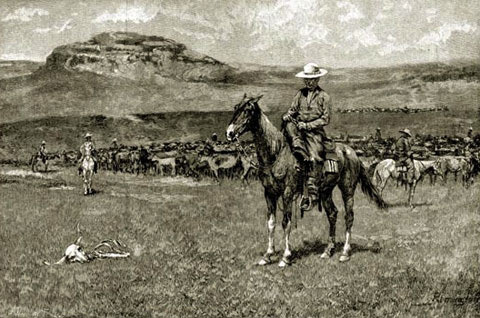
In the history of the American West, Wyoming is a land with a particularly unique character.
When people think of the West, they often picture California, Nevada, and Arizona, but the true essence of the West lies in Wyoming.
From the construction of Jamestown in the early 1600s to the early 1900s, during the era of pioneering and war known as the 'American Frontier,' Wyoming became a stage symbolizing the spirit of the West at the center of the continent.
Especially from the 1850s to the 1890s, the United States was rapidly expanding westward, and the 1920s, when capitalism took root, marked the completion of the 'Western Myth.'
It was a time when gold mines were discovered, and cowboys, gunslingers, Native Americans, and sheriffs mixed together. Behind the glamorous legends lay greed, violence, and countless tragedies.
During this period, American governance gradually expanded westward. People seeking gold, immigrants moving for farmland, and many pioneers looking for new opportunities flocked to the West.
However, that land was already the home of Native Americans. Their land was taken under the name of 'settlement,' and the massacre of Native Americans became a daily occurrence. The western territory of the United States as we know it today is the result of blood and tears.
While cities like Boston and New York in the East were already on the path of industrialization, the West was still an unknown space where the map was not yet complete. Unlike the complex state borders in the East, the states in the West were delineated in straight lines, a result of artificial division drawn with a pen. Originally, it was land belonging to Native Americans, France, and Mexico, but as the United States gained independence and fought wars, it acquired all that territory.
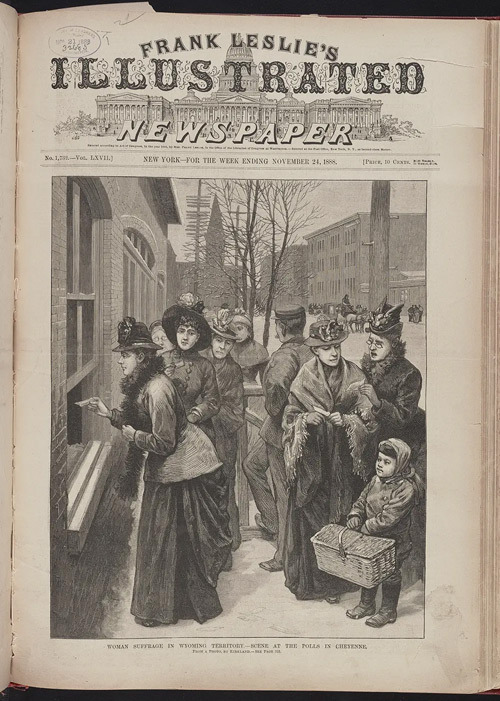
Through the Louisiana Purchase, the United States bought vast territories from France, and by winning the Mexican War, it gained Texas and California, expanding across the continent.
Throughout this process, the belief in 'Manifest Destiny' was present. Under the belief that God had given land to America, it was considered sacred and just to expand westward.
This ideology led to the invasion of Hawaii, the Mexican-American War, and the Spanish-American War, laying the foundation for imperialism.
During the Civil War, the 'Homestead Act' was enacted, allowing immigrants to acquire land in the West for almost free.
Europeans flocked to America dreaming of the 'American Dream,' and the vast western lands were filled with people.
Wyoming was also included in this wave, becoming a symbol of the West with the emergence of cowboy culture, railroads, and mining towns.
Ultimately, the history of the westward expansion is not just a process of land acquisition, but a grand narrative where human desires and ideals intersect.
The barren plains and wind-swept canyons of Wyoming still bear traces of that era.
And in that wind, one can still hear the primal voice of the American spirit saying, "Go west."




 Real Estate |
 MAX009 BLOG |
 nixxon |

 logger |
  dralix58 |
  Gorama Round |
  Skydiving |
  dreamport |
  Yellow Snowman |
  Toaster Pizza Magic Show |
  velvetnom |
  Anytime Journey |
  Mrs. Duluth |
  jaxter |
  Atlanta Mama |
  Baguette Blog |
  US Embassy |
  Korean Mom |
  My NYC |
  moo moo |
  Mr Oh |
  forevergee |
  festival |
  manchester |