
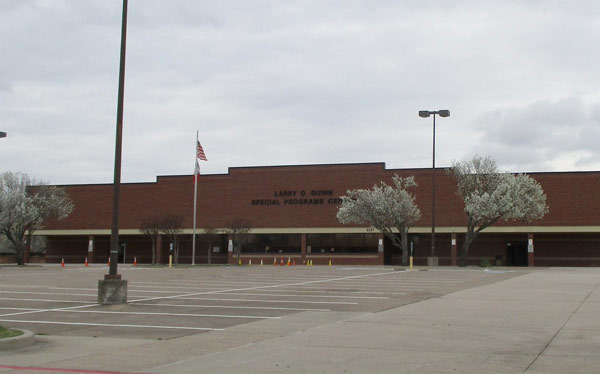
It's hard to tell what the building at 2221 Legacy Dr. in Plano, Texas, used to be.
Now, it serves as an alternative high school known as the Guinn Special Programs Center.
While it looks like an ordinary educational facility with students coming and going, a closer look at the building's past reveals quite an interesting story.
This place was originally a store for the large grocery chain Food Lion. Food Lion attempted to enter the Texas market during a period of rapid growth in the East and South, resulting in the opening of this Plano location in late 1991.
At that time, Plano was experiencing rapid population growth, with new housing developments and commercial facilities expanding together. From a location standpoint, it was hard to predict failure.
However, the reality was different. This store closed on February 26, 1994, less than three years after opening.
Its lifespan was quite short for a large grocery store. While there are various speculated reasons, the most significant is that Food Lion's pricing strategy and brand recognition did not resonate well in the competitive Texas retail market, where strong competitors had already established themselves.
The strategies that worked in the East did not translate well to the distinct characteristics of Texas.
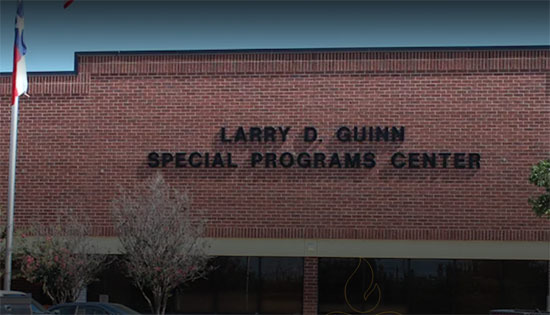
Interestingly, large retail buildings like this are often demolished or repurposed for warehouses, churches, or gyms.
However, this building was repurposed as an educational facility. The current Guinn Special Programs Center operates alternative education programs for students who struggle to adapt to the traditional high school system. The fact that classrooms and counseling rooms now occupy the space where checkout counters and refrigerated displays once stood creates a striking contrast.
This case illustrates that commercial real estate does not necessarily have to survive solely for commercial purposes.
Though it failed as a retail business, it has been reborn as a space that contributes to the community in a different way. Such transformations are more common in rapidly growing cities like Plano, where the demand for public infrastructure continues to rise.
The building remains the same, but the activities taking place inside have completely changed according to the times and needs. The fact that this space, once focused on consumerism in the early 1990s, has now become a place that helps students make a fresh start shows that this building is not just a case of failure but a record of change.
It seems that even an ordinary building you might encounter by chance in Plano holds such stories, adding to the enjoyment of looking at real estate and cities.





 Zoom Zoom Zoom |
 Hajiwon Blog Hair Salon |
 Dala Dala |
 Texas Lone Star Longhorn Spirit |
 Helpful Life Stories |
  US Embassy |
  Korean Mom |
  My NYC |
  moo moo |
  Mr Oh |
  forevergee |
  festival |
  manchester |
  constant |
  Leapfrog Move |
  vibranto |
  Tora Tora |
  yellowbutter |
  Dolly |
  NYC saladbar |
  Finding Superfoods |
  lightyear |
  song bang |
  vexomo |
  Indiana Jones |