

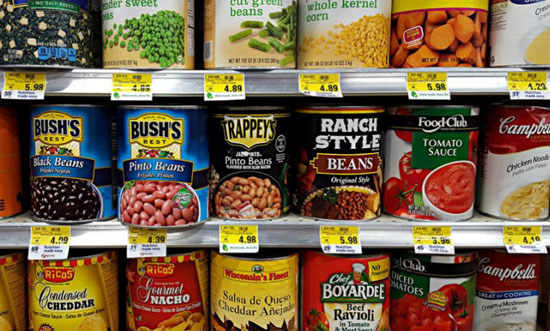
Living in the U.S., I often get confused by the expiration dates on food items like sugar, salt, bouillon, and canned goods, which are long-lasting products.
They look perfectly fine on the outside, and most of the time, they don't seem like they would spoil, but some expiration dates indicate that certain items can still be consumed after the date, while others suggest they could cause illness if eaten.
Starting with sugar, even though it has an expiration date, it's more about 'quality changing' rather than 'spoiling.' Sugar creates an environment where microorganisms struggle to survive, so it rarely spoils, and if stored properly, it can be consumed well past its expiration date. However, it can harden if it absorbs moisture and may take on odors from strong-smelling foods.
Salt is similar. Whether it's sea salt or table salt, it doesn't degrade over time, so expiration dates are often just a formality. However, iodized salt can lose its iodine content over time, which may reduce its functional quality. So, while regular salt is generally fine past its expiration date, it's best to use iodized salt within the recommended time frame. Proper sealing is also key.
When it comes to bouillon or seasoning powders, the situation changes a bit. These products contain proteins, fats, and spices, making them susceptible to moisture, oxidation, and temperature changes. It's best to use bouillon like Dashida within 6 months to a year after opening, and storing it in an airtight container in the fridge can help it last longer. If left open for too long, the flavor may weaken and taste dull due to oxidation. While it may not be completely spoiled, the taste will definitely diminish.
Canned goods are surprisingly simpler. Canned food is sterilized, so it can often be consumed 1 to 2 years past its expiration date. However, if a can is bulging, excessively rusted, or if the lid is puffed up, or if gas escapes when opened, it should be discarded immediately. This could indicate the presence of dangerous bacteria like botulinum, which should never be consumed. Conversely, if the can looks fine and smells normal, a slight past expiration date is usually not a significant issue.
To manage these stored foods properly, 'location and container' are really important. First, use airtight containers. Most issues with moisture, mold, and oxidation occur when food comes into contact with air, so transferring items from their original packaging to airtight containers is much safer. Second, store them together. Keeping sugar, salt, and seasonings in one place makes it much easier to manage and check expiration dates. Third, write down the opening date. Especially for items like bouillon, chicken stock powder, and coffee powder, the time after opening is crucial, so writing the date on masking tape and sticking it on the container helps avoid confusion later.
Also, storing canned goods in a cool place is important to prevent expansion, so keep them in a cool area or pantry, and manage older items by placing them at the front for first use.
Ultimately, there are foods like sugar and salt that hardly spoil, and others like bouillon that can easily change in flavor, as well as canned goods that require visual inspection to determine their condition. It's best to move away from the mindset of judging solely by expiration dates. By understanding the characteristics of each ingredient and storing them properly, you can safely use the food in your home for much longer.







 xylora |
 Aura-Infused WACAM |
 wendra |

 Texas Lone Star Longhorn Spirit |
  Korean Mom |
  My NYC |
  moo moo |
  Mr Oh |
  forevergee |
  festival |
  manchester |
  constant |
  Leapfrog Move |
  vibranto |
  Tora Tora |
  yellowbutter |
  Dolly |
  US Embassy |
  NYC saladbar |
  Finding Superfoods |
  lightyear |
  song bang |
  vexomo |
  Indiana Jones |