
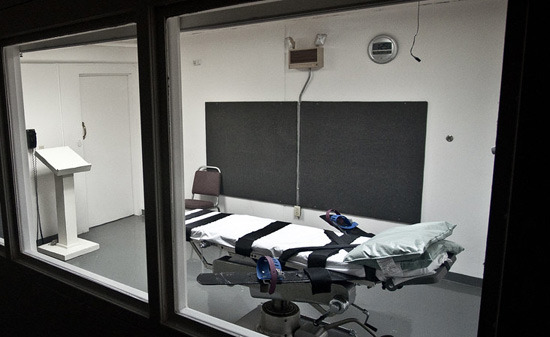
Many people ask if South Korea has abolished the death penalty, but it is not a country that has completely eliminated it.
The criminal code still contains provisions for the death penalty, and sentences are still handed down. However, since 1997, the country has not carried out any executions, making it a de facto abolitionist state according to international standards. This ambiguous situation is the crux of South Korea's death penalty system. It is difficult to say it has been abolished or that it is still maintained.
So why has it stopped since 1997? It cannot be explained by a single reason. First, political considerations played a significant role. At that time, the Kim Dae-jung administration was in a trend of strengthening its image as a human rights country after democratization.
During the military regime, the death penalty was associated with political prisoners and espionage cases, symbolizing state violence, and there was a strong perception that this legacy needed to be broken. The moment executions were resumed, it would be hard to avoid criticism that the nature of the regime was regressing to the past.
Additionally, there was considerable distrust in the judiciary. As time passed, cases that were later revealed to be innocent through retrials emerged, leading to a widespread perception that the death penalty, once carried out, could not be reversed and was too dangerous a system. While South Korean society has rapidly developed, the investigative practices and trial processes had not yet reached a level of complete trust, and continuing executions in this state posed a significant political burden.
There is also the issue of trade friction; in fact, the European Union is very strict about the death penalty. Countries that carry out executions are classified as human rights violators and face pressure in diplomatic and trade relations. In reality, several countries have accepted the suspension of the death penalty as a condition for EU membership or free trade agreements. South Korea was no exception. While it is difficult to say that trade was directly blocked if the death penalty was not abolished, it is true that failing to meet human rights standards led to accumulating disadvantages in diplomacy and the economy.
However, it is not easy to view this simply as a decision made for monetary reasons. South Korea was already in a situation where it had much to gain and little to lose by halting executions.
There is no evidence that continuing executions significantly reduces crime, while the pressure and image loss from the international community have been increasing. Politically and diplomatically, there was no longer a reason to press the execution button again.
However, in the United States, the death penalty is still in operation. Currently, the death penalty is legally permitted in about 27 states, the federal government, and the military, and while some states have effectively halted executions, most can still carry them out.
However, many states in the U.S. have abolished the death penalty (23 states and Washington D.C.) or have placed moratoriums on executions, leading to a general trend of decreasing death row populations and execution counts.
As a result, even for the same murder case, the outcome can vary completely depending on where the crime occurred. If the crime is committed in a state where the death penalty is allowed, a death sentence may be imposed, while in a state that has abolished it, even the most heinous crimes can only result in life imprisonment.
From a South Korean perspective, this may seem unfair, but in the United States, it is not viewed as strange. This is because Americans tend to think of states as small countries. Each state has different histories, political tendencies, religious views, and perceptions of crime, and recognizing these differences in law is seen as American-style democracy.
The reason the federal government does not enforce uniformity by saying, "All states must maintain the death penalty" or "All states must abolish the death penalty" can also be seen in this light.








 Living in New Jersey blog |
 hoosierdaddy |
 Kim You Shin |
 Tonky |
  viroma |
  cookie |
  Live and that's it |
  Alright Twain |
  eatontown blog |
  HAWAII Korean Church News |
  Amore |
  linex |
  Balancework |
  laro90 |
  MEDBIO American Doctor Blog |
  SWAT TEAM BLK |
  DREAM BIG |
  frostbite |
  330 Forever My Love |
  El Dorado |
  dralix58 |
  Gorama Round |
  Skydiving |