


I started playing golf in 2022 and I am currently a golfer with 3 years of experience.
At first, I went to the range with friends and got hooked when I occasionally hit the ball perfectly, captivated by the 'thwack' sound.
Then I found myself thinking, "I hit that one pretty well, didn't I?" and it felt like a rush of dopamine, and that's when I think my real addiction began.
Now, I understand that wanting to become a single handicap golfer means going beyond just playing well; it means becoming someone for whom golf is second nature.
To achieve that, you need to be somewhat obsessed with golf. You need to hit hundreds of balls a day and practice swing corrections.
Before you can establish the correct posture, it needs to become muscle memory. This is what we call muscle memory.
Golf muscle memory is the process of making your body remember the swing motion through repetitive practice.
As you do this, you can focus more on other aspects like the ball, rhythm, and body movement without worrying about the swing itself.
To develop muscle memory, it's effective to practice the correct movements repeatedly and to correct your swing by looking in a mirror or recording yourself.
The saying from professionals that 'your body should react instinctively' is all thanks to this repetition.
However, just hitting a lot of balls isn't the answer. Direction is also very important.
Even if you hit 200 balls a day, you need to understand why you're slicing, why the clubface is open, and practice accordingly.
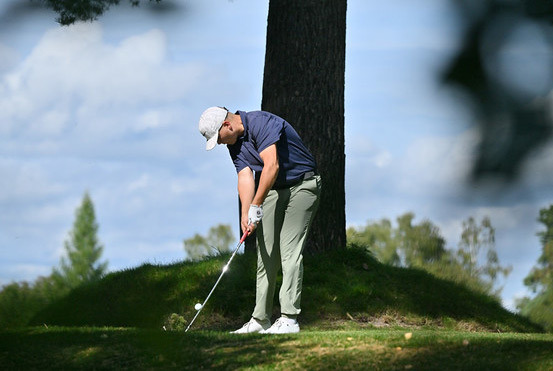
So, you need to study with your mind and train with your body. And you need to get out on the course regularly.
Practicing without field experience is like studying for a driving test without ever getting on the road.
You need to feel the wind, the grass, the slope, and the tension in your mind to truly improve your skills.
But the real issue is... simply investing a lot of time doesn't guarantee success.
The key is how many 'good habits' you build during that time.
For example, at first, you might be obsessed with the driver, but at some point, you realize that short game is what really affects your score.
From that moment, your practice pattern changes. One day you focus on iron distance, another day on bunker shots, and another day on putting distance control.
If you go to the practice range every day, try splitting your time into 1 hour for basic swings to warm up, 30 minutes for accuracy, and 30 minutes for short game.
Most golfers experience a slump around the 3-year mark, but those who don't give up and focus on their 'mental' game rather than just technique get closer to becoming a single handicap.Then, after hitting a few singles and feeling good...
In fact, maintaining a single handicap is a whole different world, haha.
When you say you want to hit a single again, the more you try, the tenser you become, and the worse you hit, creating a vicious cycle.
That's why steady single players learn to breathe before they focus on their swing.
It's important to let go of greed, acknowledge mistakes, and consistently maintain your own routine.
If you consider only the amount of practice, you should realistically practice at least 5 times a week for 1-2 hours each time for about 2-3 years to have a realistic chance of achieving a single handicap.
There is a saying that golf is 90% mental and 10% skill, but what's more important seems to be 'integrating golf into your daily life'.
For example, 15 minutes of stretching before work, putting practice after lunch, and hitting the course once on the weekend, something like that.
As those days accumulate, golf becomes not just a hobby but a part of your daily life, and ultimately, that shows in your skills.
In the end, being a single handicap isn't about being a genius or lucky; it's the result of someone who didn't give up.
So, approach each shot with the mindset of "What feeling will I experience today?"
I think that's the most realistic path to becoming a single handicap golfer.
 ThirstyJjang







 candytip |
 Gold Bar |
 Pirate Ship Popcorn Maker |
 Montgomery Mom |
 Anjollinya Blog |
 Round and Round Children's Song Kingdom |
 Spaghetti Flying Religion |

 Information on All Regions of the United States |
  US Embassy |
  Korean Mom |
  My NYC |
  moo moo |
  Mr Oh |
  forevergee |
  festival |
  manchester |
  constant |
  Leapfrog Move |
  vibranto |
  Tora Tora |
  yellowbutter |
  Dolly |
  NYC saladbar |
  Finding Superfoods |
  lightyear |
  song bang |
  vexomo |
  Indiana Jones |