
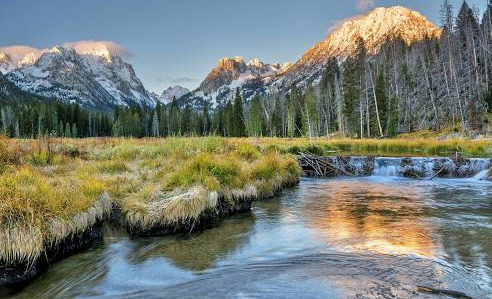
Idaho was first introduced to Europeans in the early 19th century through the Lewis and Clark Expedition.
This area was originally inhabited by Native American tribes such as the Nez Perce and Shoshone. The discovery of gold in the 1860s sparked a gold rush, leading to the development of mining and significant economic growth.
Idaho was established as a territory in 1863 and became the 43rd state of the United States on July 3, 1890. The state's economy has grown primarily around mining, agriculture, and forestry, and now the technology and tourism industries also play important roles.
As of 2020, Idaho's population is approximately 1.83 million. Major cities include Boise, Nampa, and Meridian. In recent years, the population has been rapidly increasing, attributed to the relatively low cost of living and attractive natural environment.
Idaho's median income is about $60,999 (as of 2021), which is slightly below the national average. The economy is supported by agriculture (especially potato production), forestry, manufacturing, and the technology sector, with recent growth in tech companies and startups centered around the Boise area.
Idaho is a state attracting many immigrants and new residents due to its natural scenery, outdoor activities, and relatively affordable cost of living.
The racial composition of Idaho, based on data from the U.S. Census Bureau (as of 2020), is as follows:
White: Approximately 82.8%
Of this, non-Hispanic whites make up about 78.4%.Hispanic/Latino: Approximately 13%
Hispanic/Latino individuals are descendants from Mexico and Central American countries.American Indian and Alaska Native: Approximately 1.7%
Represented by tribes such as the Nez Perce and Shoshone.Asian: Approximately 1.3%
Main countries of origin include the Philippines, China, and Vietnam.Black or African American: Approximately 0.9%
Native Hawaiian and Other Pacific Islander: Approximately 0.2%
Two or More Races: Approximately 4.2%
Idaho has traditionally had a large white population, but the Hispanic/Latino population is rapidly increasing, significantly impacting the state's culture and economy.
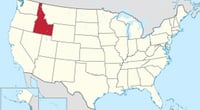
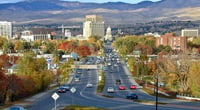
Idaho, located in the northwestern U.S., is famous for its rugged mountainous landscapes, expansive wilderness, and numerous outdoor recreation opportunities. Its capital, Boise, lies in the foothills of the Rocky Mountains and is intersected by the Boise River, a popular spot for activities like rafting and fishing. In downtown Boise, Julia Davis Park offers a tranquil green space with attractions such as a rose garden, museums, and a zoo, making it a vibrant hub for nature and culture.



 A landlocked state |

 festival |
 208 Master |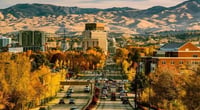
 US Regional Information Blog |
 Korean Boo |
  Tonky |
  viroma |
  cookie |
  Live and that's it |
  Alright Twain |
  eatontown blog |
  HAWAII Korean Church News |
  Amore |
  linex |
  Balancework |
  laro90 |
  MEDBIO American Doctor Blog |
  SWAT TEAM BLK |
  DREAM BIG |
  frostbite |
  330 Forever My Love |
  El Dorado |
  dralix58 |
  Gorama Round |
  Skydiving |