

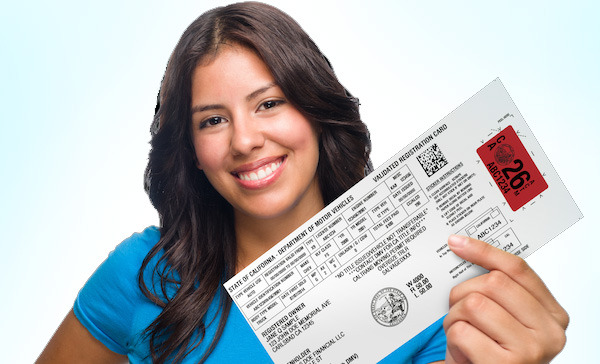
California vehicle registration fees feel more like tax bills than the annual DMV invoices.
Whether it's a new or used car, once you buy a vehicle, the DMV seems to adopt an attitude of "Nice car, let me take a cut" by adding various fees.
Typically, the basic registration fee in California is $60, plus 0.65% of the vehicle's value - the Vehicle License Fee (VLF), a Transportation Improvement Fee (TIF) set by brackets, and various other fees like the CHP Fee, Air Quality Fee, and County Fee. As soon as you buy a car, you become a cash machine for the DMV, haha.
Ultimately, for a car valued at $30,000, the registration fee ends up being around $400-500, which is essentially the fate of California drivers.
However, the important question is, where does all this money go?
When you break down the registration fees, it's not just paying DMV employees; it's also used for road maintenance, air quality management, and improving traffic infrastructure in counties.
Especially the VLF plays a significant role in state finances.
In California, with over 30 million cars... an incredibly high number and vehicle prices higher than in other states, the DMV collects a staggering amount of cash every year, with estimates suggesting that the total vehicle registration fees collected in California reach billions of dollars annually.
With over 30 million vehicles, even averaging $300-400 each is an enormous sum. Thus, the DMV is not merely a paperwork processing agency but is effectively acting as a "tax collector for vehicles."
So how does it compare to other states? People often say, "Everything is expensive in California."
Vehicle registration fees are no exception. For example, in Texas, the basic registration fee often ends up being around $50-75.
Of course, there are additional road taxes by county, but the structure is not based on a percentage of vehicle prices like in California.
So even if you buy a new car for $30,000, it's common for the registration fee to be around $150.
Nevada is similarly much cheaper than California, and Arizona tends to have a flat fee structure.
Conversely, some Eastern states like New Jersey or New York have county taxes or additional fees that can be surprisingly high, but still, they don't have the systematically high structure that California does.
California's vehicle registration fees are in the "upper tier."
While the DMV claims to use the funds for traffic infrastructure and environmental improvements, complaints arise like, "Why should I pay more just because my car is expensive?"
Especially when you ask a friend living in another state, it feels even more absurd.
For instance, a friend in Texas might say, "I paid just $75 for the same car!" and someone in Arizona might ask, "Why is it so complicated there?" In summary, the money the California DMV collects annually from vehicle registration fees is a significant part of the state budget and ranks quite high compared to the rest of the U.S.
Thus, for California drivers, it has become an unwritten rule that "you must be prepared for registration fees when buying a new car."
Ultimately, the DMV firmly maintains its position as a cash cow, taxing every vehicle that rolls on California roads every year.



 Piano Teacher Blog |
 Coco and Lulu |
 Lightning Sikhye Cooking Method |
 U.S. Weather Bureau News |
 Kkikki Ppappa Shout Out Loud |
  forevergee |
  festival |
  manchester |
  constant |
  Leapfrog Move |
  vibranto |
  Tora Tora |
  yellowbutter |
  Dolly |
  US Embassy |
  NYC saladbar |
  Finding Superfoods |
  lightyear |
  song bang |
  vexomo |
  Indiana Jones |
  meloncat |
  novapixel |
  mortrix |
  Esther 1983 |