
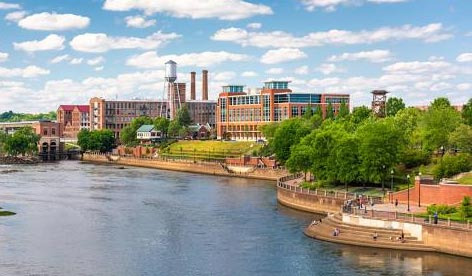
Let's talk about Columbus, Georgia, located in the western part of the state. This city is situated along the Chattahoochee River and borders Alabama, making it a place where natural environments and urban infrastructure harmonize. Now, let's take a closer look at Columbus's history, population, median income, and key advantages.
Columbus was established in 1828 along the Chattahoochee River and has served as a transportation and logistics hub since its inception. With mills and factories emerging along the river, the textile and fabric industry flourished, which played a significant role as a supply center for military goods during the Civil War, highlighting the historical value of the city.
Subsequently, the expansion of railroads and road networks greatly advanced commerce and manufacturing, and today, the city continues to grow steadily with the integration of military facilities (Fort Benning) and various industries.
Columbus is one of the most populous cities in Georgia, ranking third after Atlanta and Augusta. It has a population of over 200,000, and when including the surrounding area (Muscogee County), it forms a larger living zone. The population is diverse, with Black, White, Hispanic, and Asian communities living together.
The median household income in Columbus is reported to be around the mid-$40,000 range. While this is somewhat lower than the national average, the cost of living, including housing expenses, is relatively low, making it possible to live affordably. Many jobs are created in military facilities (Fort Benning), healthcare, education, and retail, contributing to a stable economic structure.
Advantages
Vibrant culture and recreation: The RiverWalk along the Chattahoochee River is great for walking or biking, and you can enjoy rafting or kayaking on the river. Art festivals and performances held throughout the city add vibrancy to the community.
Pride as a military city: Columbus is home to Fort Benning, a large military base, where many soldiers and their families reside. This brings together people from various nationalities and backgrounds, and military-related facilities and events significantly impact the city's economy and culture.
Educational infrastructure: With institutions like Columbus State University, there are several educational facilities that create a conducive atmosphere for students. Libraries and cultural facilities are well-equipped, providing broad educational opportunities for local residents.
Low cost of living: Compared to other major cities, housing prices and living costs are relatively low, making it attractive for those who prefer a more relaxed lifestyle.
Diversification of the local economy: Traditionally strong in textiles and manufacturing, the city's economy is now bolstered by healthcare, services, and technology sectors, enhancing its stability.
In summary, Columbus is a place with a rich history, a unique culture as a military city, and attractive recreational activities centered around the Chattahoochee River. While the median income may be slightly below the national average, the lower cost of living makes it an appealing city for residency. Whether visiting or considering settling down, it could be a great option for those interested.








 Mini Mee |
 Good Hotels |
 Korea Tiger News |
 Beauty, Health, Lifestyle Blog |
 Caribbean |
  road98 |
  Churros Train Conductor |
  gleeful |
  Burbank Lee |
  Olivia's Blog |
  Bushing Around Life |
  Active |
  Cherokee Rose |
  Kor. Master |
  Holey Moley |
  Conflite Teacher |
  Hodong Prince Over Flex |
  Mist inn |
  citrus pop |
  Onion Ring |
  phoenixia |
  viewtop |
  loverun |
  Kim Do Sun |
  SEVEN SEVEN |