

I started working near the Java Market around 2005.
At that time, there were numerous sewing factories densely packed in the downtown district of LA, known as the fashion Java Market.
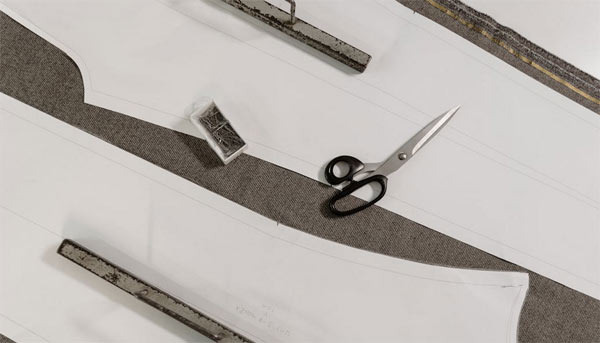
When a designer brought in a sketch, we would look at the design, trace it onto the fabric, cut it, and create the first sample.
This process was essential for the clothes to be produced in thousands at the factory. In short, the tailor was the "first profession responsible for the birth of clothing."
Back then, the tailor was such an important position that without them, the factory could not operate, and we were busy enough to be short-staffed.
Even for ready-to-wear, the cutting process was necessary for mass production in clothing factories.
Honestly, it's difficult to say that the outlook is as bright as it used to be. There are several reasons for this.
Since the 2000s, American ready-to-wear brands have moved their production to overseas factories in Mexico, China, and Vietnam to cut costs.
As a result, the number of jobs for 'cutters' in factories has inevitably decreased.
Moreover, many factories no longer trace patterns by hand; they use computer-aided design (CAD) programs to create digital patterns and cutting machines to cut the fabric. This process has reduced the space for traditional hand-cut tailors.
The downtown LA fashion district is still a hub for clothing manufacturing, but it no longer has the concentration of 'factory tailors' as it once did. Now, there are more small custom brands, sample studios, and upcycling workshops, while large factories have largely moved out.
However, they haven't completely disappeared. In some areas, tailors are still needed. When a designer creates a new garment, there is still a need for someone to accurately cut the first sample. There is a subtle sense that cannot be resolved by CAD alone.
Additionally, fields like wedding dresses and high-end suits still require a lot of hand cutting. This area does require exceptional talent.
Some boutique brands that promote 'Made in LA' need skilled tailors because they focus on small-scale production rather than mass production.
If a young person asks, "I want to build a career in this field," I honestly want to tell them this: the future is bleak if you only aim to be a simple tailor. The role of just tracing patterns in factories is indeed decreasing.
However, if you can handle CAD, pattern making, and sample production, the story changes. You become a bridge between design and production, rather than just a laborer. Especially in LA, there are many fashion professionals starting after graduating from FIDM, so skilled sample tailors are always in demand.
Traditional tailor jobs that only involved tracing patterns in factories are definitely decreasing.
But by upgrading your skills to include CAD, pattern making, and sample production, there is still a way to survive in LA.
In other words, it's no longer a job where "if you cut well, you can live off it for life," but if you have the basic skills of tailoring and can expand into other areas of fashion, I would say it's worth the challenge for young people.







 Pirate Ship Popcorn Maker |
 Total Beauty |
 Toaster Pizza Magic Show |
  Baguette Blog |
 California Information News |
  DREAM BIG |
  frostbite |
  330 Forever My Love |
  El Dorado |
  dralix58 |
  Gorama Round |
  Skydiving |
  dreamport |
  Yellow Snowman |
  velvetnom |
  Anytime Journey |
  Mrs. Duluth |
  jaxter |
  Atlanta Mama |
  Tan Sol |
  US Embassy |
  Korean Mom |
  My NYC |