
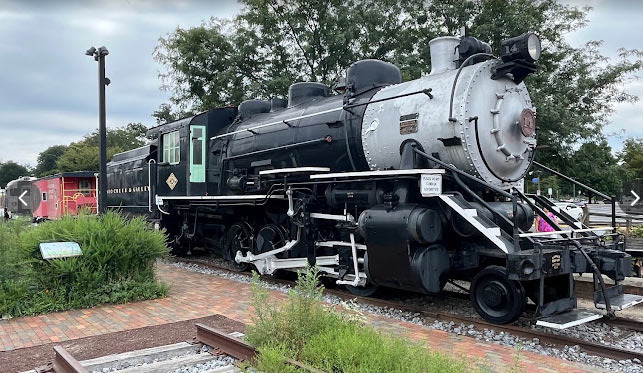
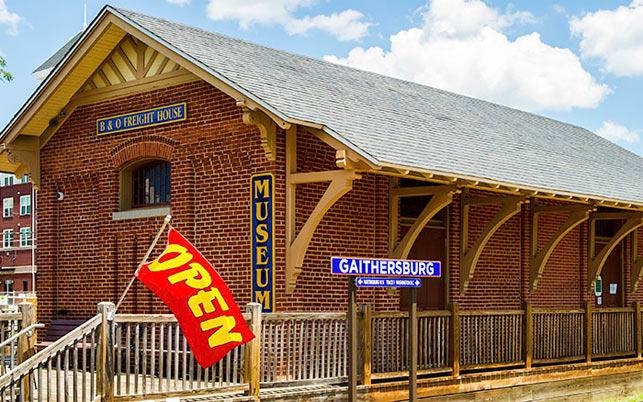
The Gaithersburg Community Museum is not a large or extravagant museum, but it focuses on the memories and stories of the area, making it more endearing the more you explore. Located next to an old train station in a red brick building, this museum is small enough to give first-time visitors the impression of "Is this really a museum?" while intricately connecting Gaithersburg's past and present.
The building itself is historical. The museum was created by renovating the B&O railroad station built in 1884, showcasing what Gaithersburg looked like during its heyday as a transportation hub over a century ago. At that time, this area was a major stop connecting Washington D.C. and Baltimore, bustling with numerous freight and passengers. Even now, it is right next to the tracks, allowing visitors to see actual trains passing by while viewing the exhibits. When a train rumbles by, it feels as if you've been transported back to the 1900s.
Upon entering the museum, the first exhibit that catches the eye introduces the early settlement history of Gaithersburg. Photographs and records display how the once-rural town developed around the railroad and the people who gathered to live here. Artifacts like pioneers' daily tools, handwritten diaries, and old shop signs are preserved, allowing visitors to vividly feel the 'living history' of the area. Rather than simply listing a timeline of history, the arrangement allows one to sense the traces of life from that era, which is quite captivating.
On one side, there is a separate exhibit dedicated to railroads. It features artifacts such as actual railroad signals, train schedules, and ticket vending machines, along with displays of uniforms worn by station staff and communication equipment. There is also a corner with a miniature train model that delights family visitors, where children cheer at the sight of the train model while adults reminisce and take photos.
Another charm of this museum is the outdoor exhibition area. Right next to the museum, there are old passenger cars and freight cars on display, which visitors can actually climb into and explore. The wooden benches, metal railings, and old signs remain intact, allowing one to feel the passage of time. On sunny days, many people take photos here, and local residents enjoy picnics with their children.
Another interesting point is that this museum is not just a space preserving the past, but a living place for the current local community. True to its name as a 'community museum', it hosts children's programs, local history workshops, and art experience events every weekend. For example, during "Train Story Time", children can make their own model trains and listen to old railroad stories told by staff.
Next to the museum, there is a gift shop that sells postcards, mugs, and railroad-related souvenirs symbolizing Gaithersburg. There are many handcrafted items made by local artists, making it more enjoyable to browse for 'small artworks' rather than just souvenirs. And most importantly, the admission is free. As a public cultural facility operated by the city, anyone can visit without any burden. However, there is a voluntary donation box at the entrance, and many visitors contribute a few dollars to support local culture out of gratitude.
In front of the museum, there is a small park and benches, making it a nice spot to sit and relax with a cup of coffee after viewing the exhibits. On a pleasant weekend afternoon, taking a slow walk along the tracks while gazing at the scenery where the past and present meet is perhaps the greatest gift this museum offers.
The Gaithersburg Community Museum is not a place that overwhelms visitors with grand buildings or massive exhibits. Instead, it showcases the city's identity through warm and simple stories. The breath of a railroad town from a century ago, the lives of pioneers, and the pride of the people living here today are all encapsulated in one space.
If you are traveling to Gaithersburg, I recommend stopping by this small museum, not just the shopping mall or lake park. It is a 'crossroads of time' where the city's past and present coexist, and a symbol of strong local culture, albeit small. Above all, it holds the true face of Gaithersburg, filled with stories that resonate with humanity.








 tartbear |
  Thersburg Mrs |
 monkey |

 manchester |
  constant |
  Leapfrog Move |
  vibranto |
  Tora Tora |
  yellowbutter |
  Dolly |
  US Embassy |
  NYC saladbar |
  Finding Superfoods |
  lightyear |
  song bang |
  vexomo |
  Indiana Jones |
  meloncat |
  novapixel |
  mortrix |
  Esther 1983 |
  fortbliss |
  Moscow Kim |