

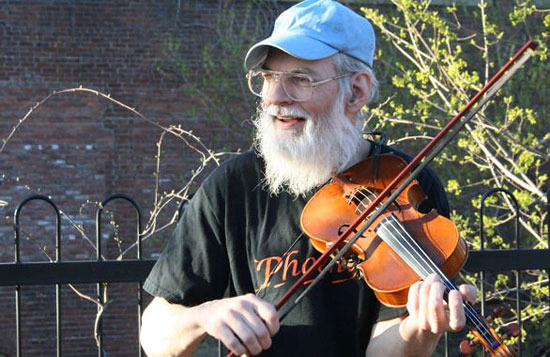
The capital of Wisconsin, Madison, is surprisingly known as the 'Living Fiddler's City' due to its active roots music and local performance culture.
The music that once echoed in old western saloons has not disappeared; instead, it continues in different forms through festival stages, youth ensembles, and folk and bluegrass bands. In this city, fiddling is not a museum artifact but a living culture performed alongside people.
During the summer, it is not difficult to hear the sound of fiddles at outdoor festivals held throughout Madison. Especially at festivals centered around roots music and Americana genres, fiddlers take the stage as main performers.
These events are not just performances; they also include jam sessions and workshops where the audience can participate directly, with fiddles playing a central role in the spontaneous music that blends naturally with other instruments. Fiddles are not just 'stage instruments' but part of a playful culture shared by the local community.
Additionally, Madison has a fiddling group for young students. A youth fiddling group, consisting of elementary to teenage students, practices bluegrass, Celtic, and folk styles and performs on various stages. This shows that fiddling culture is not merely nostalgia or old memories but is being passed down to the next generation. It is also impressive that children learn fiddling through rhythm, presence, and improvisation rather than just sheet music.
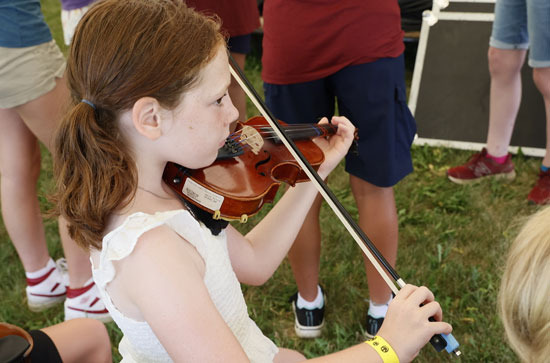
The fiddling music in Madison does not limit itself to the country genre.
Fiddles play a leading role in bluegrass, Irish and Celtic music, American traditional folk, and even modern Americana bands.
While fiddles are indeed a key tool for forming identity in country music, they are loved in a broader spectrum in Madison. When combined with guitar, banjo, and mandolin, fiddles become solo instruments that elevate the rhythm of the song and sometimes show a stronger presence than vocals.
What is particularly interesting is that fiddles are not treated as 'high-end instruments' like classical ones, which allows for more freedom. It does not matter if they are old, and a rough tone is seen as a character. Creating an atmosphere is more important than performance mistakes, and music created by laughing and responding with the audience is valued more than strictly following sheet music.
Ultimately, seeing a fiddler in Madison means experiencing the true charm of fiddling in moments of spontaneous music-making on a grassy stage by the lakeside or on the stage of a small live bar, rather than in a grand concert hall.




 candytip |
 Gold Bar |
 Pirate Ship Popcorn Maker |
 Montgomery Mom |
 Anjollinya Blog |
 middlekick |

 Wiscon Shin Blog |
 Forever Coco is Bangga |
 Superman Cat Blog |
  Atlanta Mama |
  Baguette Blog |
  US Embassy |
  Korean Mom |
  My NYC |
  moo moo |
  Mr Oh |
  forevergee |
  festival |
  manchester |
  constant |
  Leapfrog Move |
  vibranto |
  Tora Tora |
  yellowbutter |
  Dolly |
  NYC saladbar |
  Finding Superfoods |
  lightyear |
  song bang |