
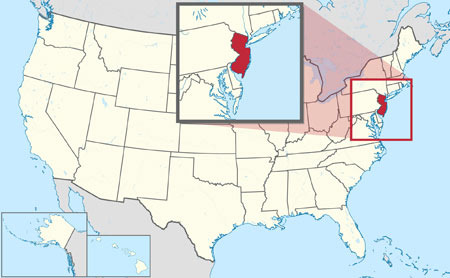
New Jersey is a state located in the northeastern United States, with a history of experiencing various political changes. Historically, New Jersey's political orientation has been a crossroads of conservatism and progressivism, and currently, it forms a complex political landscape influenced by various factors within the state. Below, we will take a closer look at the political orientation and history of New Jersey.
Currently, the Democratic Party holds a dominant position, but the political landscape continues to fluctuate due to political differences between urban and rural areas, diversification of the population, and changes in the economic structure. In the future, New Jersey is expected to play a politically significant role, reflecting various social and economic issues.
New Jersey is a state located in the northeastern United States, with a history of experiencing various political changes. Historically, New Jersey's political orientation has been a crossroads of conservatism and progressivism, and currently, it forms a complex political landscape influenced by various factors within the state. Below, we will take a closer look at the political orientation and history of New Jersey.
Colonial Era and Early Politics
- Colonial Period: New Jersey was seized by the British from the Dutch in 1664 and was subsequently divided into 12 administrative regions. During this period, the British political system and laws were primarily introduced.
- American Revolution: As the 12th state to participate in the Declaration of Independence in 1776, it served as a crucial strategic point during the Revolutionary War. After independence, New Jersey quickly ratified the U.S. Constitution to become a member of the federation.
19th Century: Industrialization and Political Change
- Industrialization: From the late 19th century to the early 20th century, New Jersey prospered economically as various manufacturing industries, including steel, textiles, and automobiles, rapidly developed. This led to the growth of the working class and an active labor union movement.
- Development of Party Politics: Initially, the state government primarily competed between the Democratic and Republican parties, with progressive elements being strengthened due to industrialization and urbanization.
Political Orientation until the Mid-20th Century
Balance of Conservatism and Progressivism
- Republicans and Democrats: From the early to mid-20th century, New Jersey maintained a balance between the conservative Republican Party and the progressive Democratic Party. There was a tendency to value both economic prosperity and the protection of workers' rights within the state.
- Centrist Politics: New Jersey often exhibited a centrist political orientation, and at certain times, a deadlock between conservatism and progressivism occurred.
Influence of the Scard Family
- Scard Family: From the mid-20th century to the 1970s, the Scard family played a significant role in New Jersey politics, exerting strong influence within the Democratic Party. Particularly in the 1960s and 1970s, the Scard family dominated the state government, strengthening the political position of the Democratic Party.
Development and Changes in Modern Politics
Party Changes and Trends
- Strengthening of the Democratic Party: Since the 1980s, New Jersey has gradually shown a dominance of the Democratic Party. In particular, support for the Democratic Party has strengthened in urban areas (such as Newark, Jersey City, and Princeton), significantly impacting the political orientation across the state.
- Role of the Republican Party: In rural and suburban areas, support for the Republican Party remains solid, but overall, the state tends to favor the Democratic Party.
Governor Elections and Political Landscape
- Governor: In recent decades, New Jersey's gubernatorial elections have primarily seen victories for Democratic candidates. For example, Republican candidates like Jack Ciattarelli have challenged, but Democratic candidates have consistently maintained an advantage in gubernatorial elections.
- Legislature: The New Jersey state legislature also sees the Democratic Party maintaining a majority in both the Senate and the Assembly. This means that Democratic policies have a greater influence in the state's legislative process.
Urban vs. Rural Politics
- Urban Areas: Major cities such as Newark, Jersey City, Princeton, and Cleveland Park are primarily progressive and strongly support the Democratic Party. These cities tend to support progressive policies due to the concentration of various industries such as education, technology, and finance.
- Rural and Suburban Areas: Rural areas and some suburban regions are conservative and tend to have strong support for the Republican Party. These areas are primarily populated by individuals engaged in manufacturing, agriculture, and traditional industries, holding conservative values.
Key Political Issues and Events
Education
- Higher Education: New Jersey is home to prestigious universities such as Princeton University and Rutgers University, making education policy a significant political issue. Education budgets, school choice, and university funding are major points of contention.
Economy and Labor
- Labor Rights: Due to the traditional influence of manufacturing and labor unions, issues related to workers' rights continue to play a significant role. Topics such as minimum wage increases and improvements in labor conditions are major discussion points.
- Industrial Diversification: The decline of manufacturing and the rise of the service and technology industries have made policies related to economic structural changes important issues.
Environment and Energy
- Environmental Protection: New Jersey's rich coastline and natural resources make environmental protection policies significant issues. Climate change response, coastal protection, and air and water quality improvement are major discussion topics.
- Renewable Energy: Sustainable energy policies and the development of renewable energy have become important political issues.
Public Safety and Law Enforcement
- Gun Control: Like the rest of the United States, New Jersey has active debates regarding gun control. The state's laws concerning gun ownership and use are continuously discussed.
- Crime Prevention: Policies related to public safety, particularly crime prevention and police reform in urban areas, are significant issues being addressed.
Immigration and Diversity
- Immigration Policy: New Jersey is a state with diverse immigrant communities, making immigration-related policies significant political issues. Protecting immigrant rights and improving legal immigration processes are major discussion topics.
- Cultural Diversity: Policies reflecting racial and cultural diversity and social integration are important issues being addressed.
Recent Political Trends and Future Outlook
Election Trends
- Swing State: New Jersey is primarily Democratic-leaning, but in some elections, Republican candidates have shown competitiveness. Therefore, the state is not always firmly in the hands of the Democratic Party, and different results can emerge in each election.
- Voter Participation: Along with political differences between urban and rural areas, the increasing participation of younger generations may lead to rapid changes in political trends.
Policy Changes
- Strengthening Progressive Policies: There is a high likelihood of strengthening progressive policies in healthcare, education, and environmental protection. Particularly, policy changes in urban areas could influence the direction of the entire state.
- Republican Response: The Republican Party will continue efforts to strengthen support in rural and suburban areas and focus on conservative issues to expand its base within the state.
Social Changes
- Diversity of Population: As the population diversifies and social changes accelerate, policies reflecting the needs of various communities will become increasingly important.
- Technological and Economic Changes: The growth of high-tech industries and changes in the economic structure will complicate political debates and trigger new policy demands.




 Living in New Jersey blog |
  hoosierdaddy |


 Uptown |
  DREAM BIG |
  frostbite |
  330 Forever My Love |
  El Dorado |
  dralix58 |
  Gorama Round |
  Skydiving |
  dreamport |
  Yellow Snowman |
  Toaster Pizza Magic Show |
  velvetnom |
  Anytime Journey |
  Mrs. Duluth |
  jaxter |
  Atlanta Mama |
  Baguette Blog |
  Tan Sol |
  US Embassy |
  Korean Mom |
  My NYC |